Long-tailed Salamander
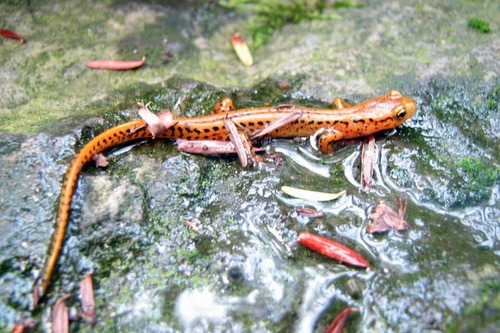
Scientific Name: Eurycea longicauda
Size: 4-6.25 inches (10-15.9 cm) in length
Status: Abundant
Habitat:
Upland deciduous and mixed hardwood-conifer forest, meadows/forest borders, open shale banks, road-cuts, pond banks, streams, springs, and in caves and mines.
Description:
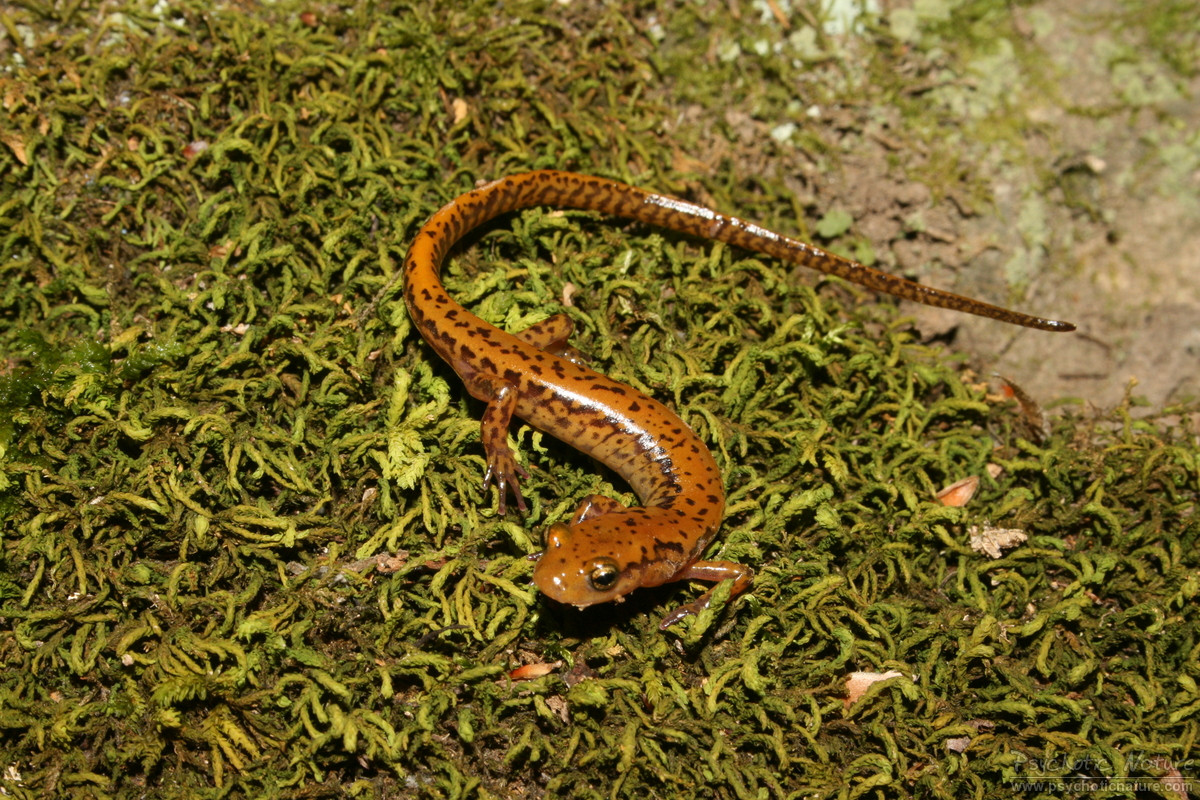
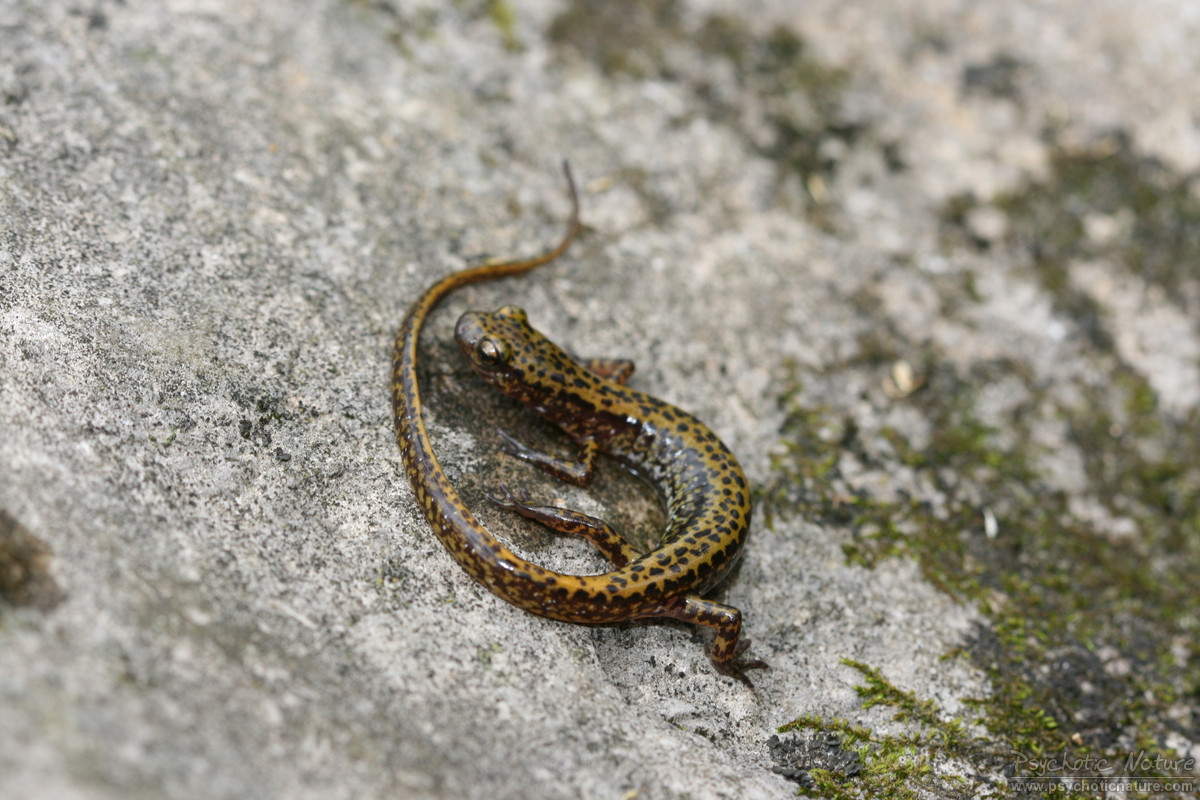
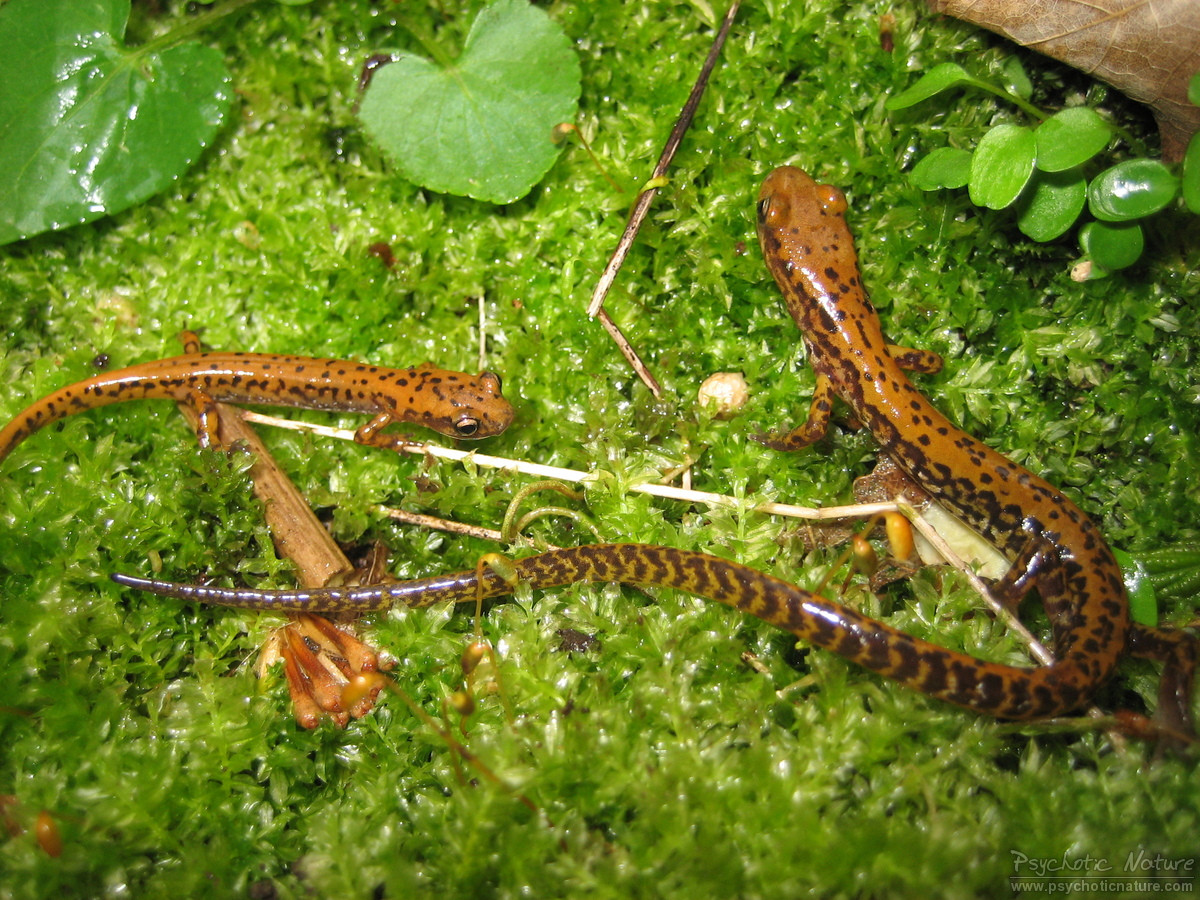
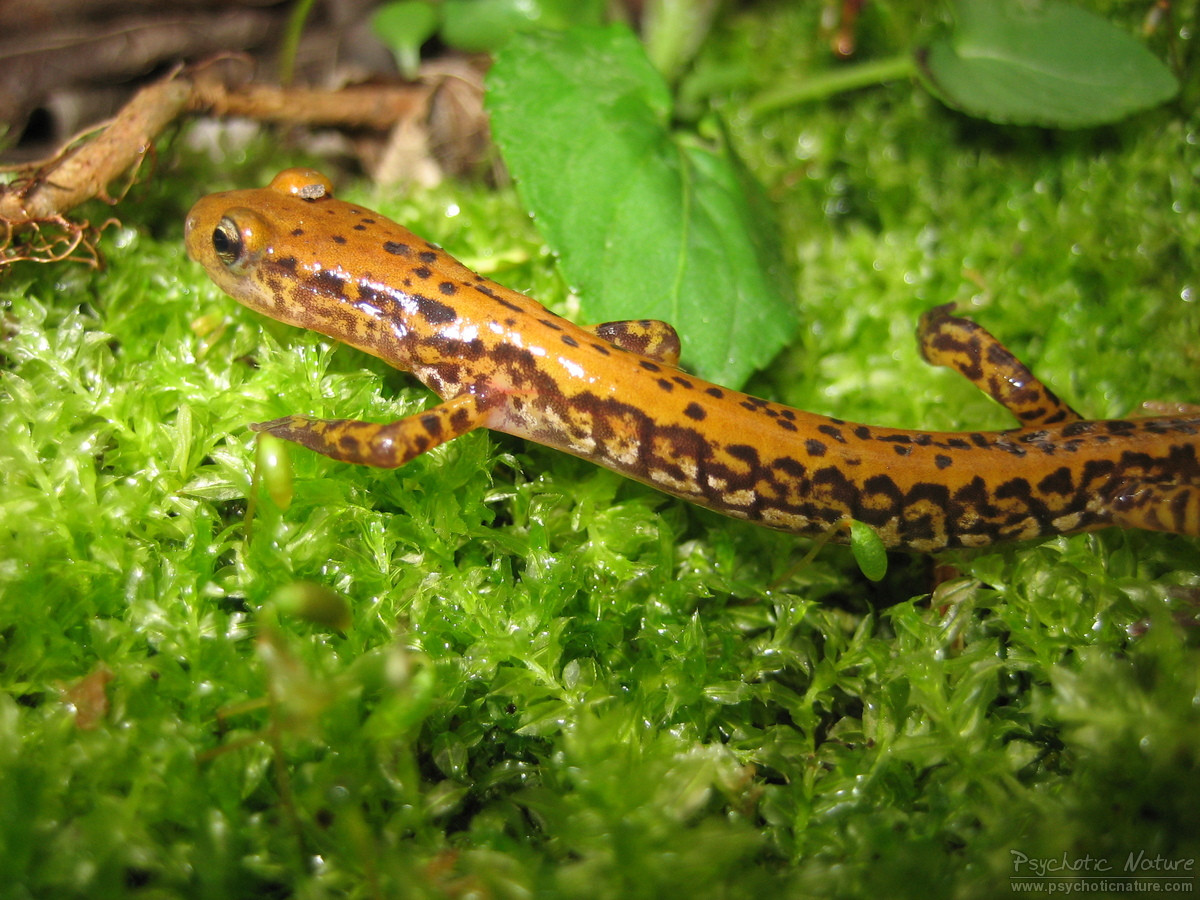
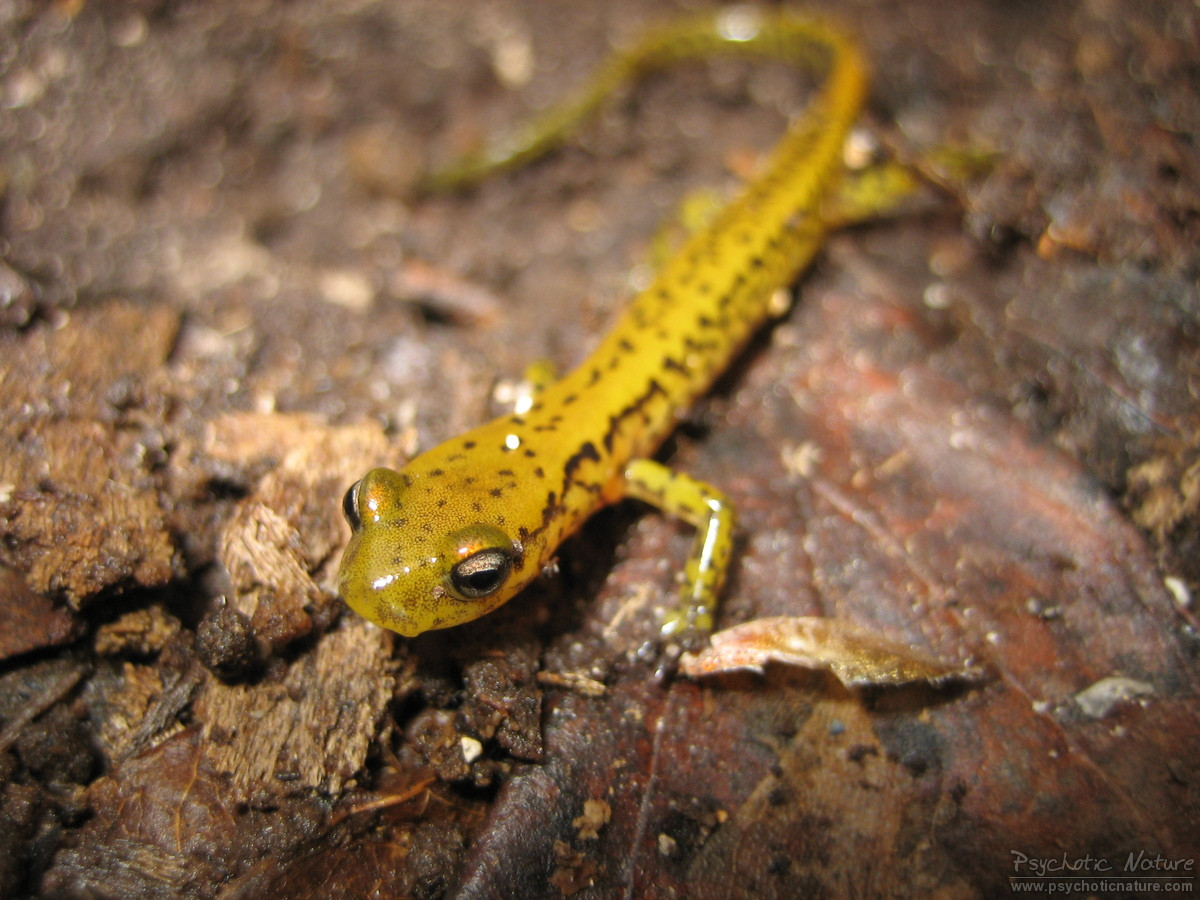
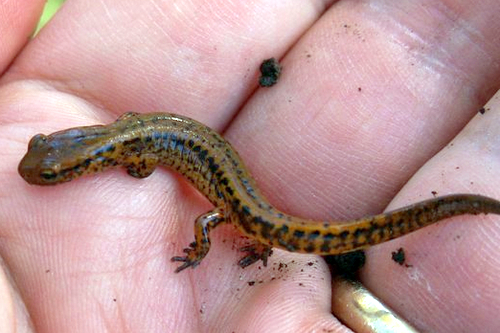
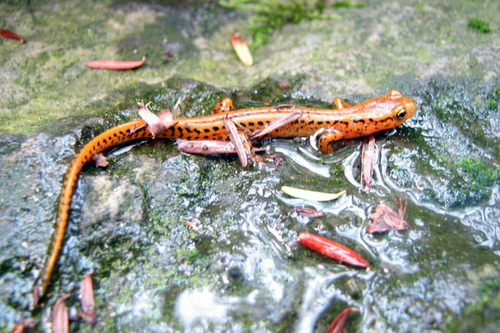
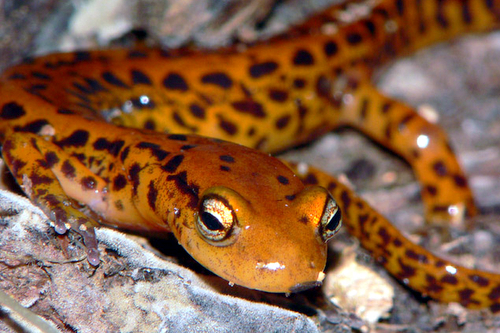
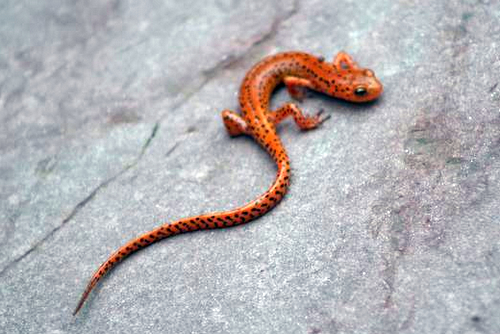
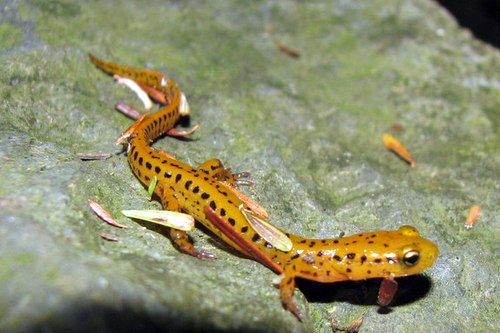
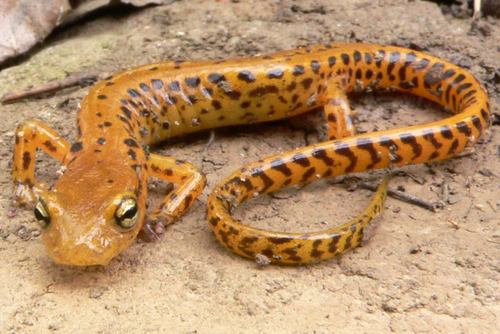
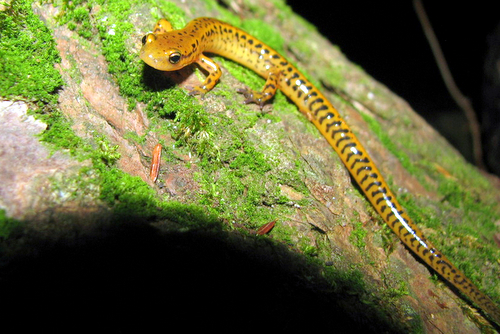
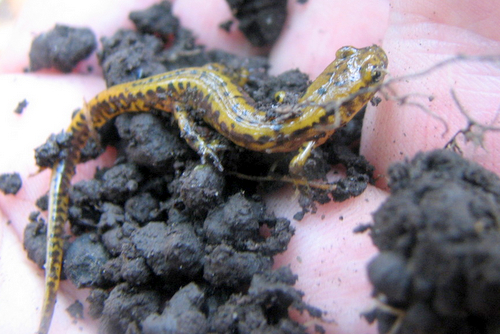
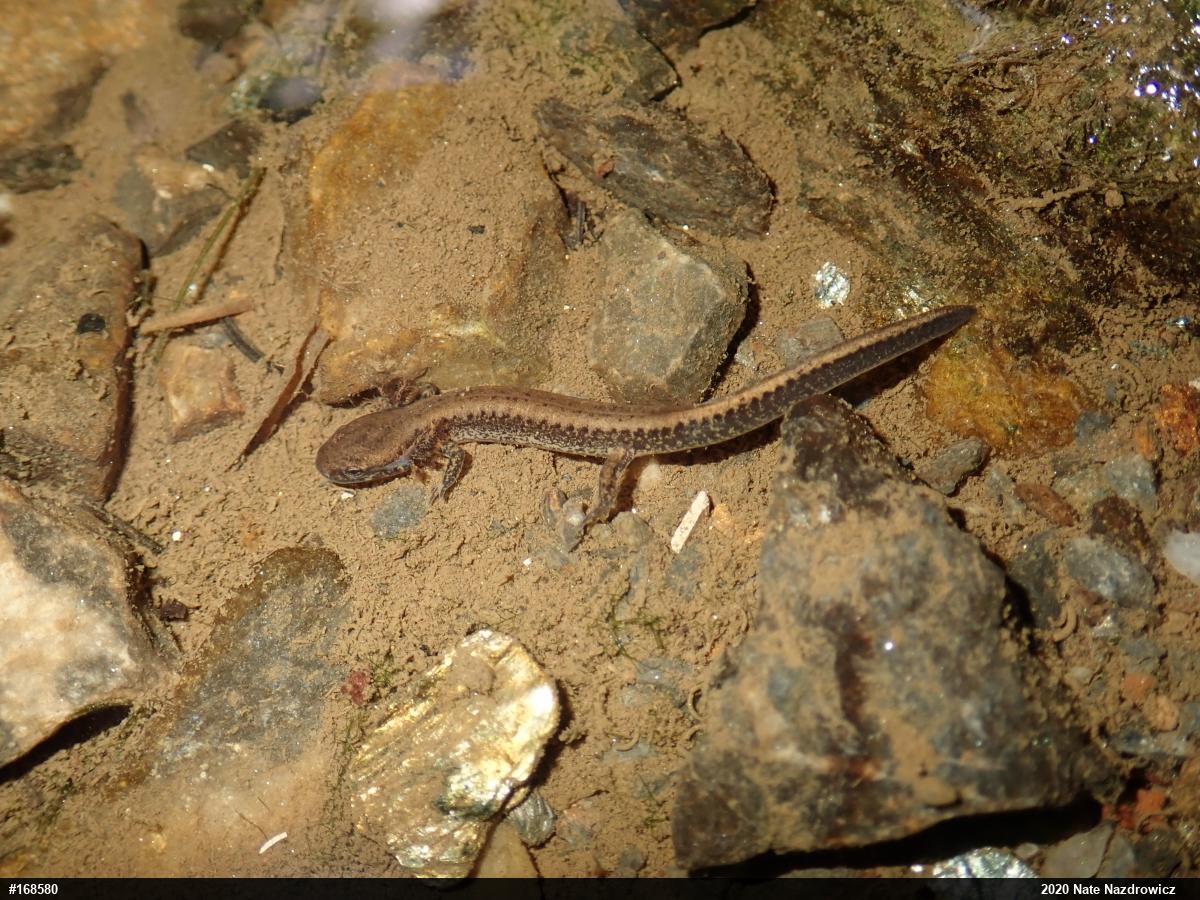
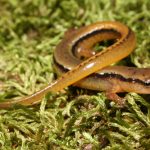
Large, long and slender species. The color and pattern is highly variable. The background color ranges from lighter yellow, orange to deep brick red with black spots that will vary in amount, location and size over the body and sometimes be absent on the top head. The underside is light yellow. The chin, throat, and upper chest may have some dark maculations. The tail has a series of herringbone shaped markings that run along the entire length of both sides. The top of the tail is usually mottled with black, but may have no markings. The tail is very long and laterally compressed with a well-developed knife-like dorsal keel.
- The color and pattern is highly variable. There are three common patterns.
- In Most Common Variation.
- The dorsal background color ranges from lighter yellow, orange to deep brick red with an abundant amount of irregular black spots that cover the dorsum and sides of the body.
- The head has a few round spots on the top; with dense spotting on the sides of the head that often form a line from the neck to the posterior margin of the eye.
- In Less Common Variation.
- The dorsal background color ranges from lighter yellow, orange to deep brick red with an abundant amount of black spots covering the sides and a single medial row of dorsal spots.
- The head has spotting on the sides; No spots are present on the top of the head.
- In Least Common Variation.I
- The dorsal background color ranges from lighter yellow, orange to deep brick red with fine black spots covering the body.
- The head has fewer and smaller spots on the sides; No spots are present on the top of the head.
- In all Variations.
- The ventral surface is light yellow.
- The chin, throat, and upper chest may have some dark maculations.
- The tail has a series of herringbone shaped markings that run along the entire length of both sides. The dorsum of the tail is usually mottled with black, but may have no markings.
- Large, long and slender species.
- The head is distinctly set off from the body and somewhat depressed dorsoventrally.
- The eyes are large and protrude.
- The limbs are well-developed and strong.
- The tail is very long and laterally compressed with a well-developed knife-like dorsal keel.
- 13-14 costal grooves.
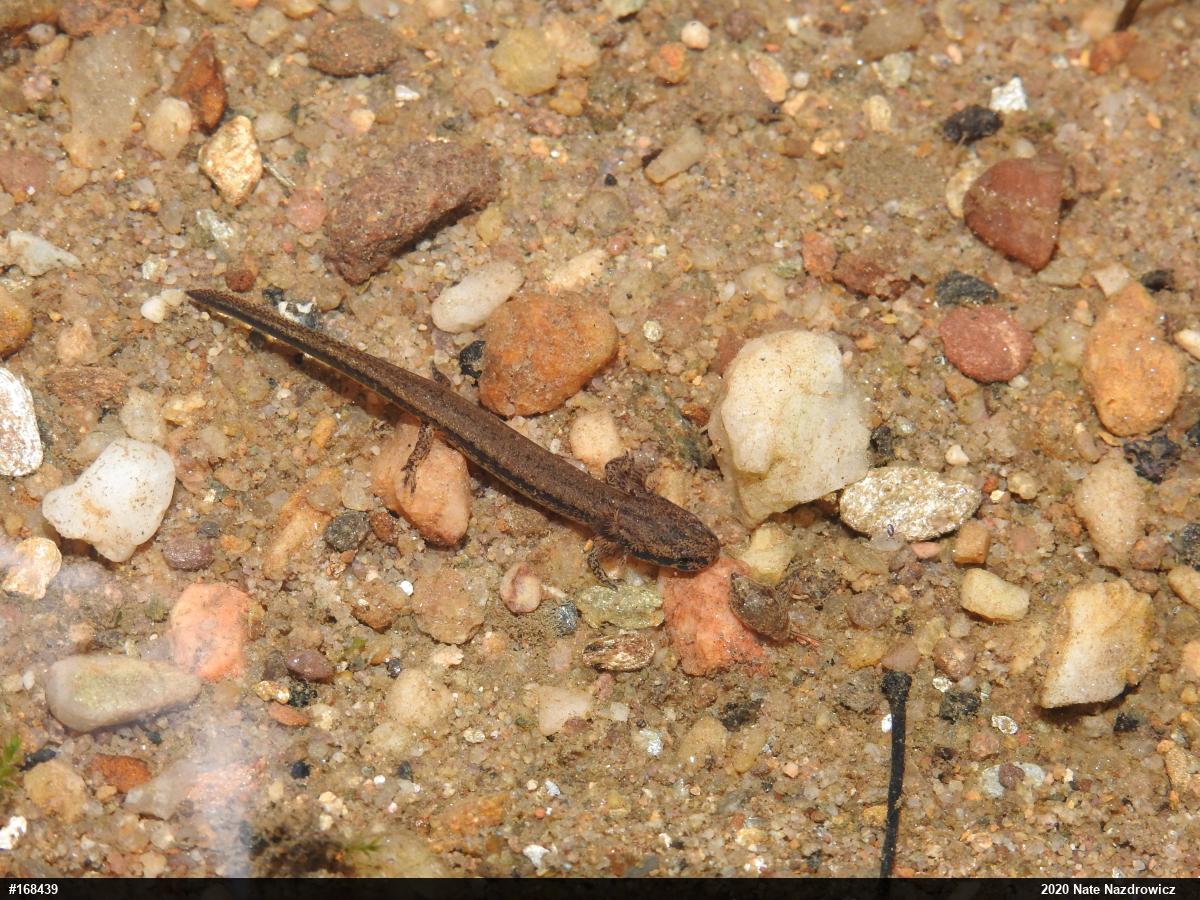
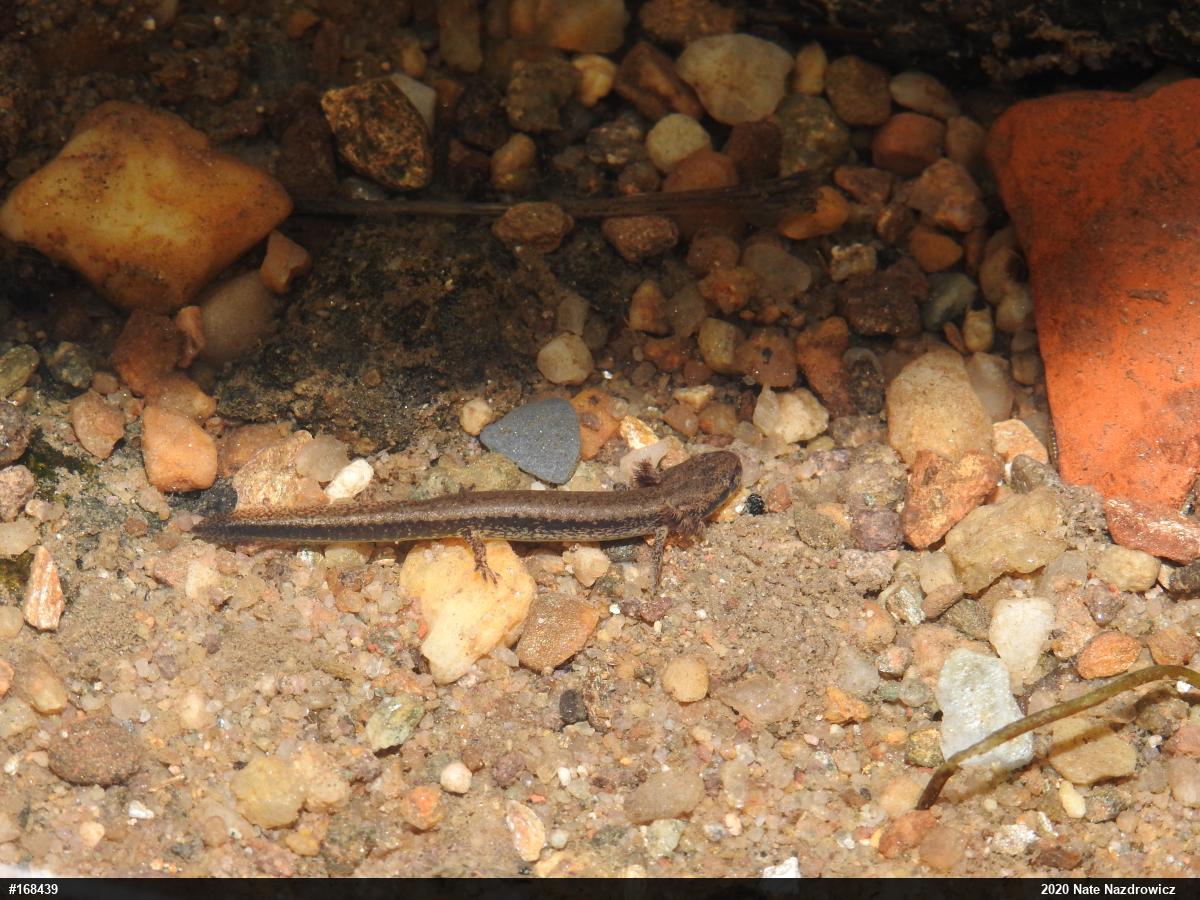
- Similar to adults but lack maculations on the chin, throat, and upper chest area.
- The dorsal color is olive grey.
- The sides are black.
- The chin is dark.
- Stream-type with short well-developed gills that branch slightly.
- The body is streamline.
- The dorsal fin is well-developed and terminates above the insertion of the hindlegs.
- The ventral is white.
- The lateral and dorsal surfaces of the head and body are covered with small dark flecks.
- Mature Larvae – The dorsal background is clear yellow with a medial row of dark spots.
- The sides are heavily flecked with dark mottling.
- The dorsal color is cream and uniformly marked with melanophores.
- The underside of the throat often has patches of melanophores.



References:
- Hulse, C. and McCoy C. J. and Ellen Censky ,1998. Amphibians and Reptiles of Pennsylvania and the Northeast. 88-93pp.
- Petranka, James W. ,1998. Salamanders of the United States and Canada. 254-257pp.
- Kyle Loucks
- Billy Brown
- Dave Emma
- Jeff Hankey
- Don Becker (psychoticnature.com)
- Nate Nazdrowicz
Heads up!
Please contribute your observation of this and other herps to the Pennsylvania Amphibian and Reptile Survey. Your help is needed.