Kirtland’s Snake
Scientific Name: Clonophis kirtlandii
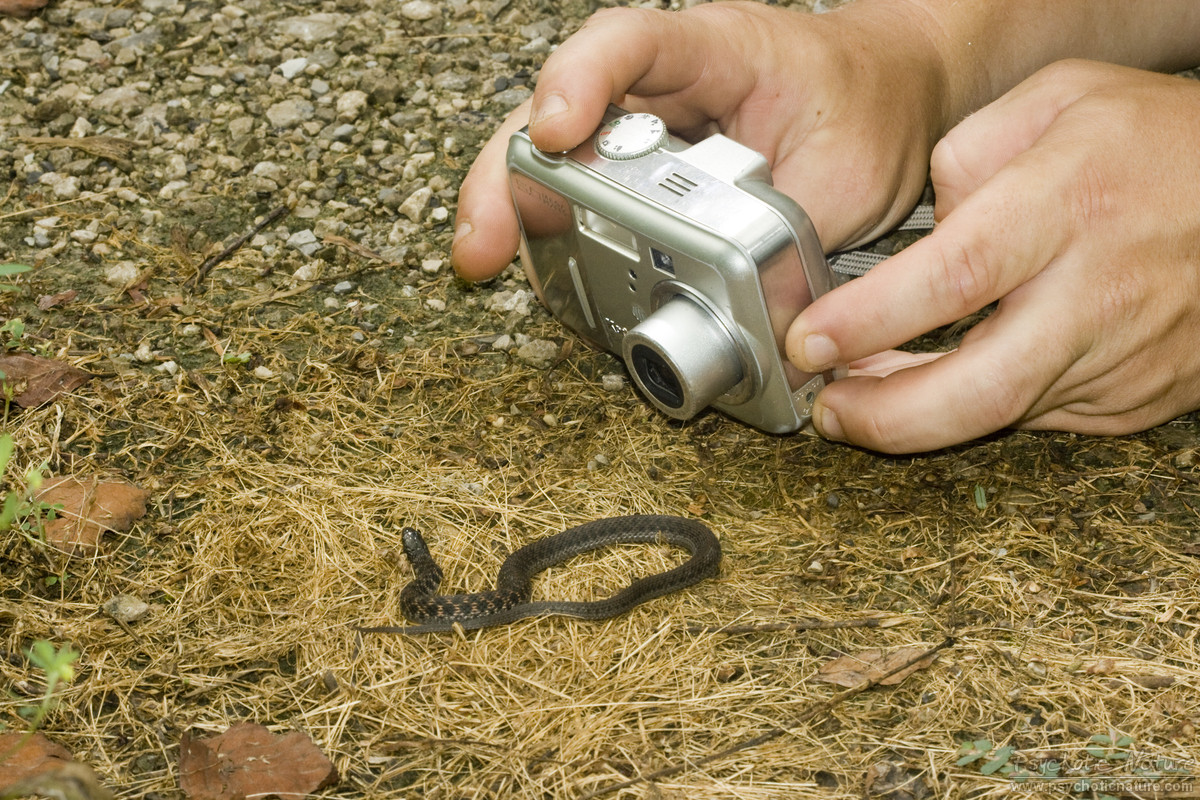
Size: 14-24.5 in. (36-62 cm) in length
Status: Endangered Species
PAHERP Resource: Have You Seen Me? Kirtland’s Snake
Habitat:
Open wetlands, marshes, canals, wet prairies, wet pastures, forested wetlands and floodplains, also urban ponds, parks, and vacant lots. May be found in burrows/crayfish holes, under leaf litter, logs, rocks, or other human debris.
Description:
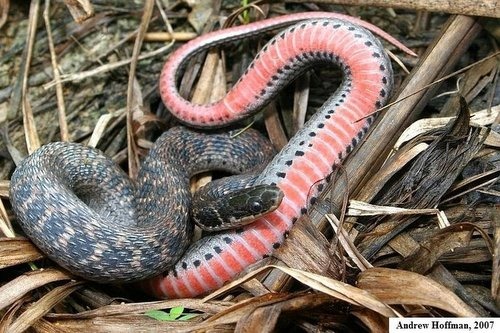
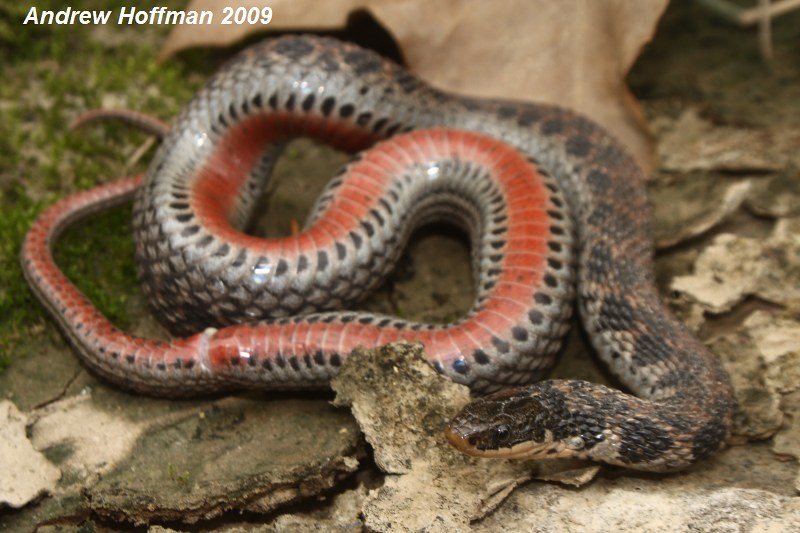
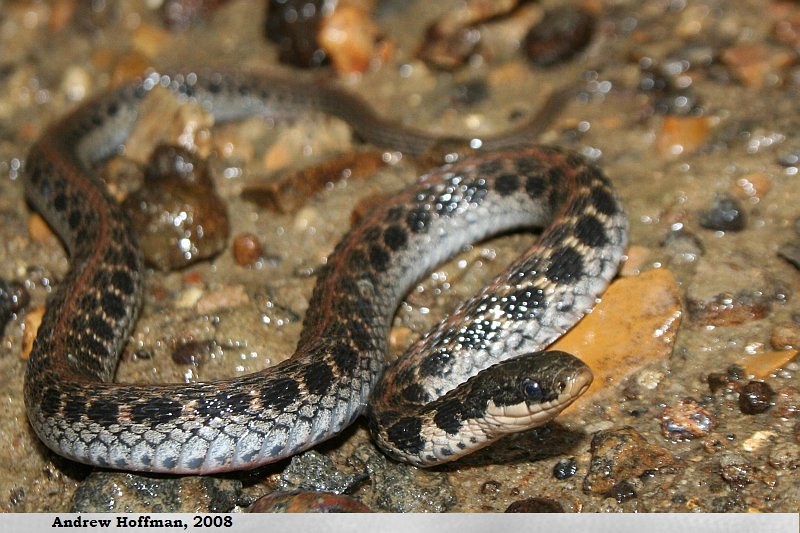
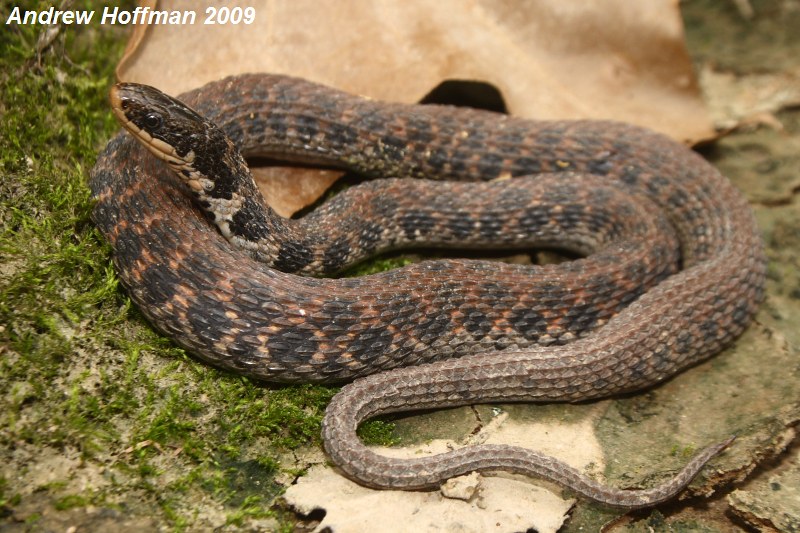
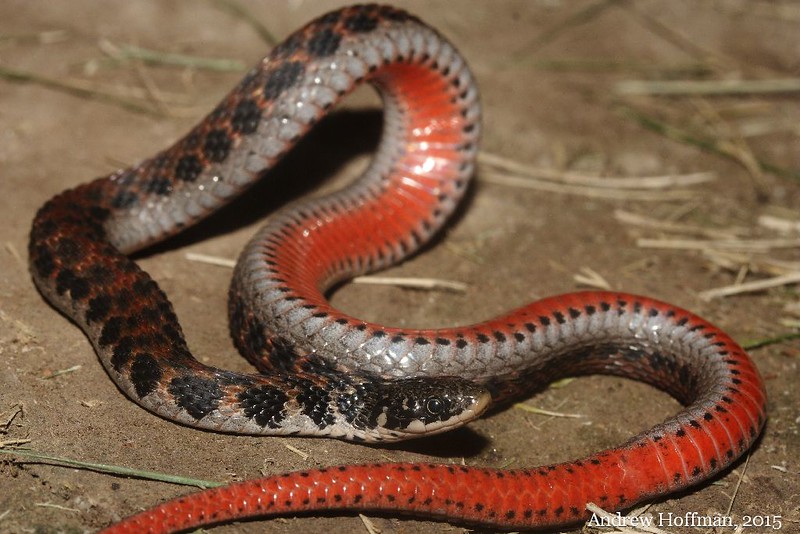
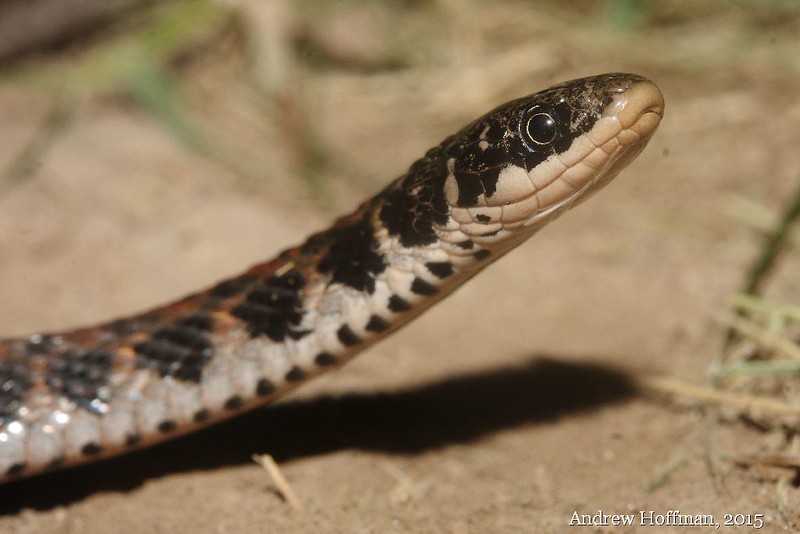
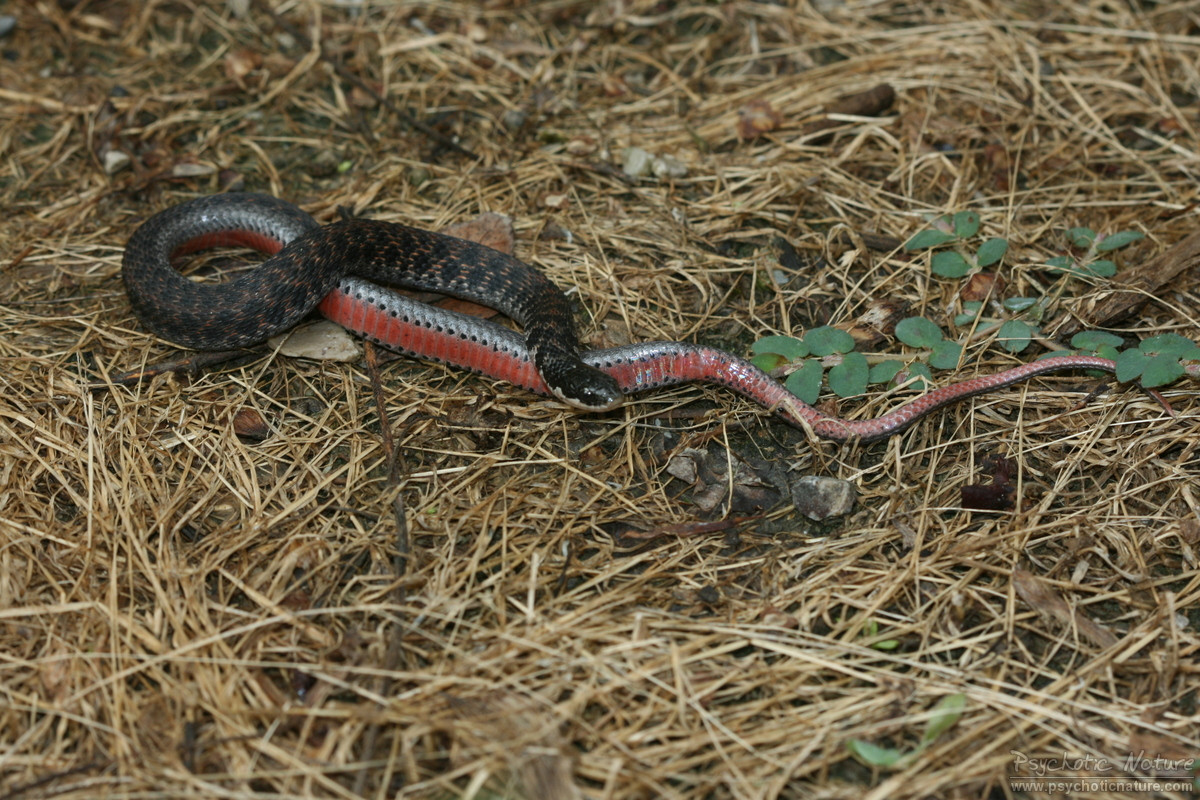
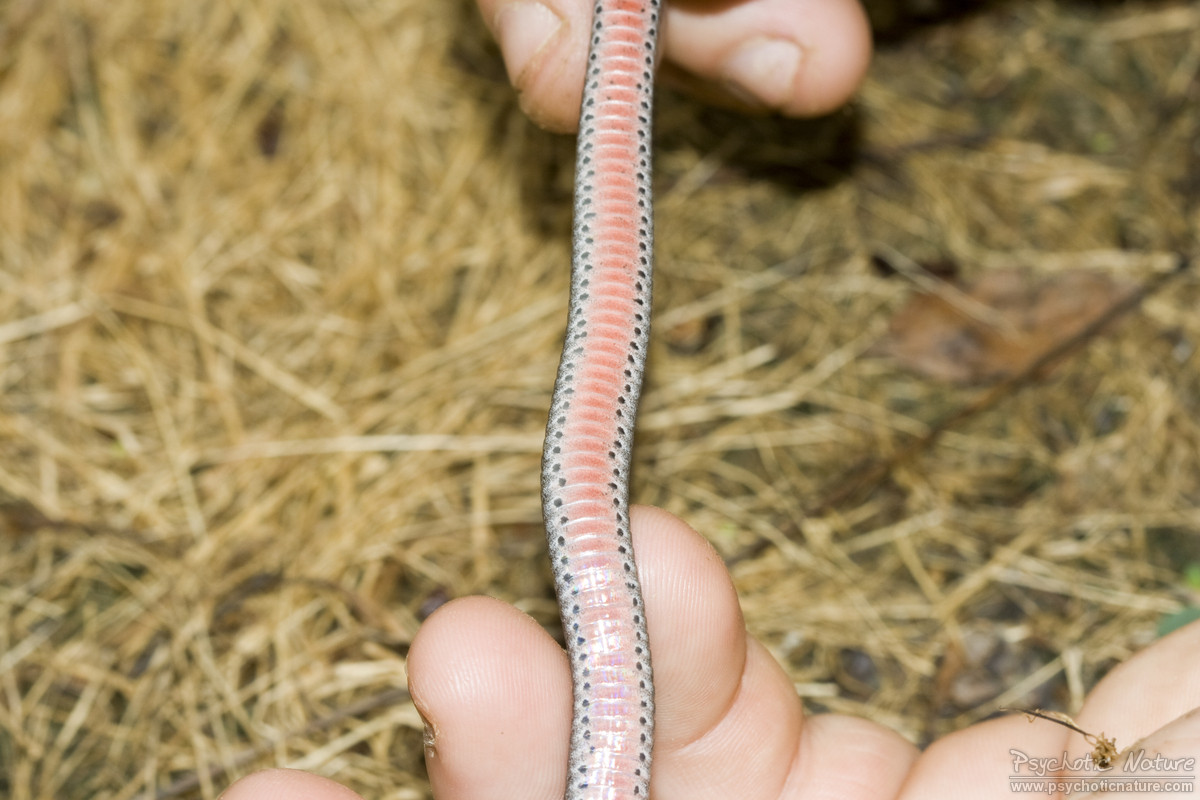
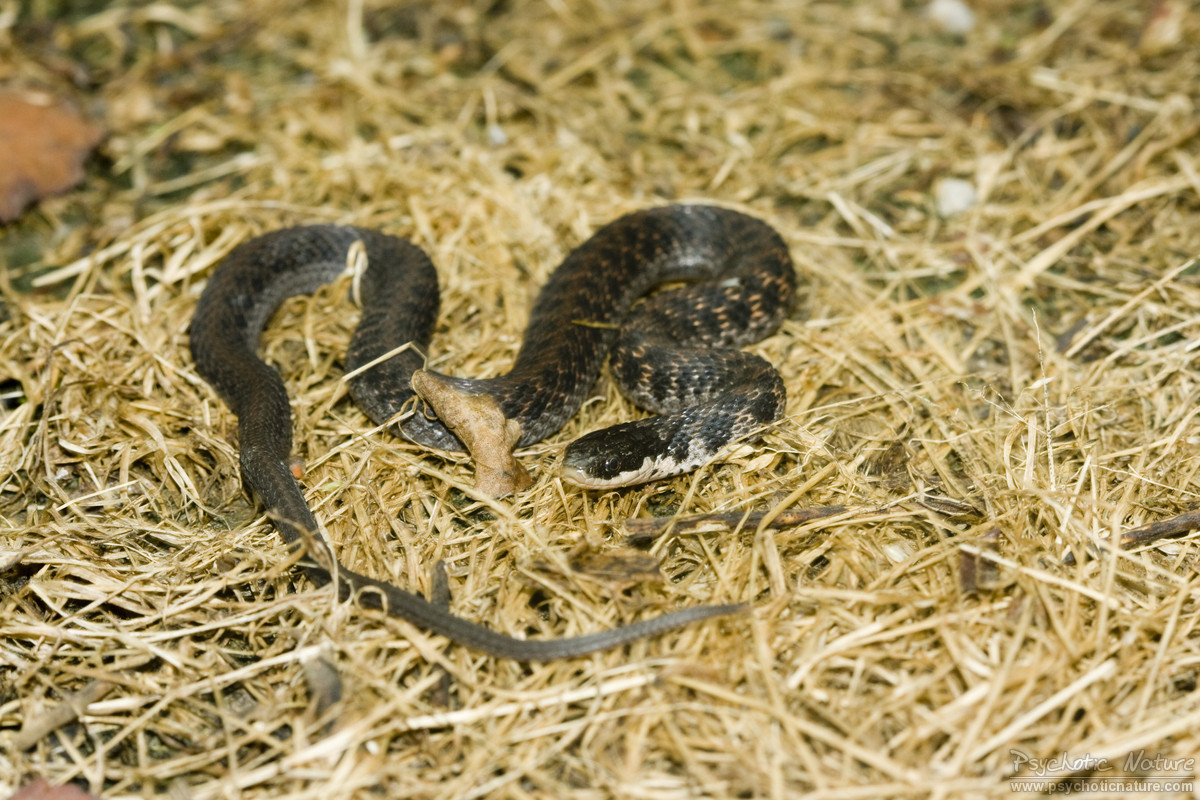
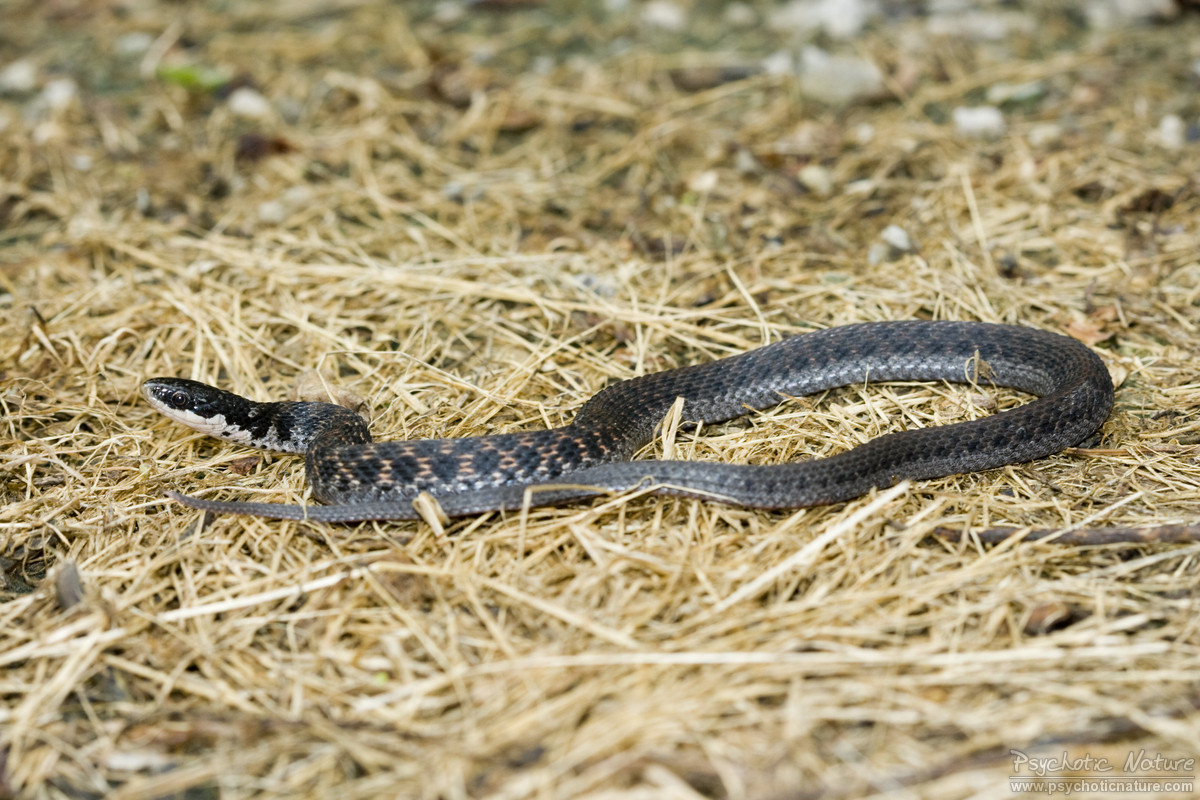
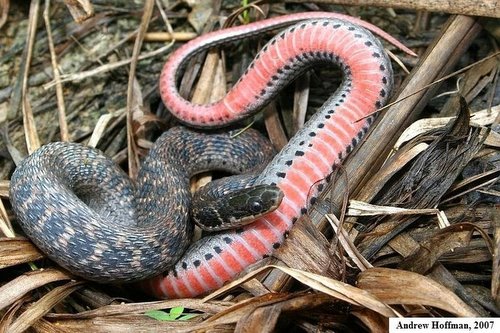
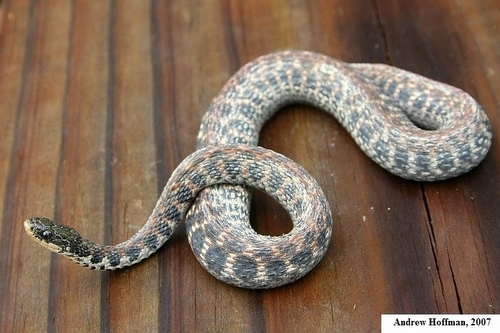
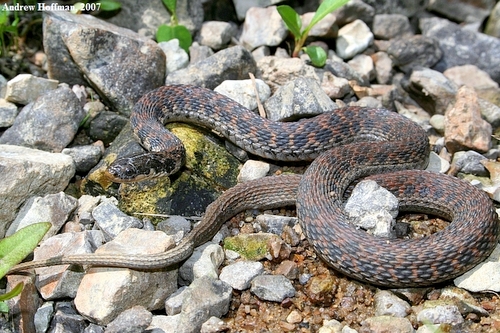
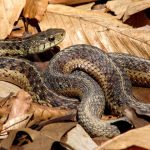
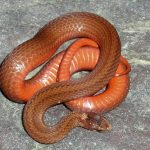
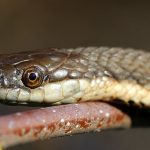
Medium-sized, semi-aquatic species with strong keeled scales with a short head that is not distinct from the neck. The top of the Kirtland's head is black with light cream colored scales around the bottom of the mouth, chin and throat. The upper body of the snake has a reddish-brown background with four rows of dark brown to black round alternating blotches. The belly is bright red to orange that is bordered a row of dark spots on each side. The Kirtland's is a fossorial species and spend most of there lives underground.
This species has not been seen in PA in over 60 years. Its historic range includes Allegheny, Butler and Venango County. If you see this species please contact us.
- The dorsal background is gray to reddish brown, with four rows of dark brown to black round alternating blotches.
- The blotches per row are 44-51.
- The ventral is bright red to orange.
- The ventral scales have a border of 2 lateral rows of dark spots.
- Medium-sized species.
- Semi-aquatic species.
- Short head.
- Head is not distinct from the body.
- Dorsal part of the head is black to brown.
- Light cream/white colored labial scales, chin and throat.
- Dorsal scales are strongly keeled.
- Fossorial species.
- 17 to 19 scale rows at midbody
- 19 scale rows at anterior
- 15-16 scale rows at posterior
- 121-137 ventral scales
- 44-64 subcaudals | 2 rows of subcaudals
- 2 nasal scales
- 1 loreal scale
- 1 preocular scale
- 2 postocular scales
- 1+2 temporal scales
- 6 supralabials
- 7 infralabials
- Anal plate is divided



References:
- Hulse, C. and McCoy C. J. and Ellen Censky ,1998. Amphibians and Reptiles of Pennsylvania and the Northeast. 273-275pp.
- Ernst, Carl H. and Ernst, Evelyn M. ,2003. Snakes of the United States and Canada. 74-77pp.
- Andrew Hoffman
- Don Becker (psychoticnature.com)
Heads up!
Please contribute your observation of this and other herps to the Pennsylvania Amphibian and Reptile Survey. Your help is needed.